WRVMA
Newsletter
Fall 2026
Building Compassion and Tolerance
Compassion for animals is a strength. Compassion for people is a skill — and skills can be built.
Read PDF Version
Westchester-Rockland Veterinary Medical Association · Quarterly newsletter
Read the FeatureAdvertisement
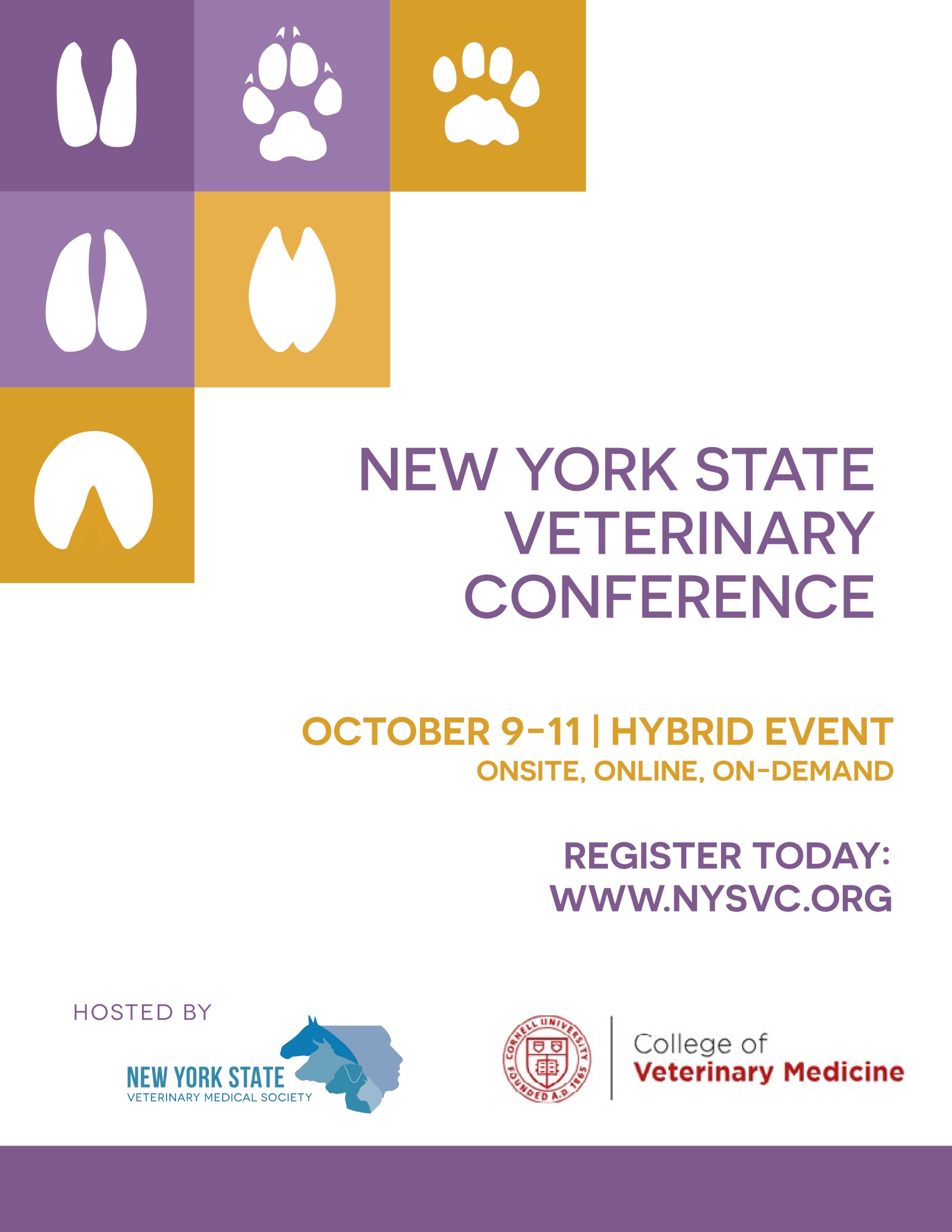 Register at nysvc.org
Chapter Chair Message
A final year, and a hope that more of you will lend a hand.

WRVMA Chapter Chair
Dear Members,
I hope everyone had a wonderful summer and is settling into the fall season. As we move through the remainder of 2026, I continue to feel incredibly proud of the community we have built within WRVMA and grateful for the members who support our organization, attend our events, and help keep us connected.
As we begin looking ahead to 2027, I also want to share a personal update that this will be my final year serving as Chapter Chair/President. After three years as President and several years before that serving on the board, this feels both bittersweet and exciting. It has been such a privilege to help lead an organization that means so much to our local veterinary community.
Over the next year, one of my greatest priorities will be helping to prepare and support our next President so WRVMA can continue to grow and thrive. I also hope more of our members will consider getting involved. Whether that means joining the board, helping with a committee, sharing ideas, connecting us with a speaker or sponsor, or simply attending an event, every contribution makes a difference. Our organization is strongest when many people lend a hand.
I especially want to recognize our current WRVMA Executive Board. This team works incredibly hard behind the scenes to create meaningful continuing education opportunities, plan social events that bring our community together, secure sponsors for our meetings and speakers, and manage all the details that keep WRVMA moving forward. Board service is often a thankless job, and I am deeply grateful for the time, creativity, and care they give so generously.
Please take a moment to send some love and gratitude to our amazing board this year. They are already hard at work planning our 2027 calendar and finding new ways to make our educational and social programming valuable, engaging, and fun. I feel incredibly lucky to work alongside such a dedicated group.
Thank you, as always, for your continued support of WRVMA. I look forward to seeing many of you at our upcoming fall and winter events — wishing you and your families a happy, healthy, and wonderful pumpkin spice season.
Monica Sterk, DVM
WRVMA Chapter Chair
Upcoming Events
Three dates for your fall calendar.
Anal Sacs: How to Help Patients Who Scoot, Lick, Leak or Smell — and Navigating the Supplement Maze
7–9 p.m.
Speaker: Meagan Painter, DVM, DACVD
New York State Veterinary Conference
Cornell University CVM and online
Onsite, online, and on-demand participation. Registration at nysvc.org.
NYSVMS Annual Business Meeting
7–8 p.m. · Zoom
Held separately from the conference so more members can take part. Zoom link by email.
Association
Client-friendly ways to address the high cost of care
52% of U.S. pet owners reported skipping or declining needed veterinary care in the past year due to cost.
As market and industry forces continue to impact the cost of veterinary care, pet owners are searching for relief. A PetSmart Charities survey, cited by AVMA in 2025/2026, found that 52% of U.S. pet owners skipped or declined needed care in the past year because of cost.
The surge in “pandemic pets” that started in 2020, plus economic pressures related to staffing, technology, drug costs and new ownership structures, have combined to create a new pricing baseline for consumers.
A new playbook — tap to expand
Preserve trust+
Be empathetic when discussing costs. Clients want clarity and understanding. Reframe the conversation so they fully understand the medical rationale behind your recommendations. Acknowledge their concerns. Discuss treatment timelines, expected results, the cost of care — and the cost of delaying it.
Use “options architecture”+
Clients appreciate structured choices. Organize recommendations into good, better, best. The baseline covers what must be done now — pain control, stabilization, essential diagnostics. The next level adds a complete workup and other recommended care. The top level is a comprehensive plan with additional diagnostics, specialist care and enhanced monitoring.
Enhance clarity with estimates+
Help pet owners feel confident with clear, detailed estimates. If your practice isn’t routinely offering written estimates for complex care, you may be missing an important chance to deliver the transparency clients appreciate. A printed treatment plan isn’t just a list of costs — it’s an educational guide that builds understanding and trust.
Speak with empathy+
Train your whole team on the language they use when discussing cost. Acknowledge emotions — “I know this is a lot to take in.” Reinforce partnership — “Let’s find the best plan that works within your budget.”
Introduce financing options early+
Don’t wait for an objection to mention payment plans and outside financing such as the CareCredit health and pet care credit card. These plans aren’t about closing a sale — they reduce treatment delays. Make their availability known in print, online, at check-in and check-out, on your estimates and around your workspace. “We have a few ways to pay, including third-party financing” can be music to a pet owner’s ears.
Treat every member of the family+
Caring for pets is what drives the practice; caring for the pet owner is what sustains it. In an environment of rising costs, consumers are more sensitive than ever. Your playbook should stress empathy, trust, radical transparency and ways to pay for different levels of care.

Provided by CareCredit, a NYSVMS affinity partner.
Disclosure →
This content is subject to change without notice and offered for informational use only. You are urged to consult with your individual business, financial, legal, tax and/or other advisors with respect to any information presented. Synchrony and any of its affiliates, including CareCredit, make no representations or warranties regarding this content and accept no liability for any loss or harm arising from the use of the information provided. Your receipt of this material constitutes your acceptance of these terms and conditions.
Cover Feature
Building Compassion and Tolerance
Compassion for animals is a strength. Compassion for humans is a skill.
Lori D’Alessandro, LCSW
Fall 2026

Most veterinary professionals are compassionate by nature. They are drawn to this work because they care about animals, want to ease suffering, and believe in doing the right thing. Still, while it is easy to feel empathy for animals, it can be more challenging to show the same compassion to pet owners or coworkers.
This difference isn’t a personal flaw; it often happens because the job is demanding and stressful. Building compassion for people is about increasing your capacity, not just pushing yourself harder.
Why compassion comes easier with animals
Animals show their distress openly, without blame or judgment, and their needs are clear — so it feels natural to respond with compassion. With people, there are often extra layers of anxiety, grief, or stress. They may push you to “solve” their problems. These situations can feel more complicated, especially when you are already tired.
If it feels harder to be compassionate with people, it usually means you are overloaded, not that you’ve lost your empathy.
Tolerance isn’t enduring others’ behavior — it’s regulating your own
Many people think tolerance just means putting up with difficult behavior. In fact, tolerance is a skill that helps your nervous system stay steady. It means you can stay present without shutting down, reacting, or emotionally pulling away.
In veterinary medicine, your tolerance is taxed by repeated exposure to:
- Emotionally charged conversations about cost, prognosis, and loss
- Time pressure and cognitive overload
- Moral stress when ideals and realities collide
- Chronic exposure to others’ anxiety and grief
When your tolerance wears thin, you may feel more irritable, less patient, or emotionally numb toward people, even if you still care about animals. These are signs that you need support, not signs of weakness.

“You can care deeply without carrying someone else’s emotional weight — which is a highly important skill in this work.”
The role of professional identity strain
Many veterinarians believe they must be competent, calm, and compassionate at all times. When people are difficult, they might think, “I should be handling this better.” That pressure makes things feel worse, not better — it’s harder to show compassion for others if you aren’t used to practicing self-kindness.
It is important to know the difference between your values and your capacity. You can value kindness but still have times when you need help to show it.
Compassion requires boundaries
If you don’t set boundaries, endless compassion can leave you drained and less able to cope. Compassion works best when you have clear limits and know when to step back. Healthy compassion includes:
- Exercising clear role boundaries with pet parents
- Sharing responsibility within teams
- Having the right to say no or pause when your capacity is exceeded
- Recognizing that emotional labor is still labor
When you respect your own boundaries, compassion is something you can keep giving, not something that wears you out.
Reframing difficult human interactions
It helps to move from judging others to trying to understand them. Sometimes people’s actions show they are in distress, not that they want to hurt you. This does not mean you excuse harmful behavior. For example:
- An angry pet parent may be expressing grief and helplessness.
- A curt coworker may be operating beyond their capacity that day.
- Repeated questions may reflect someone’s anxiety, not disrespect.
Looking at things this way helps you take things less personally, protects your emotional energy, and helps you stay tolerant.
Compassion as a practice, not a trait
Compassion for people is not something you are born with. It’s a skill you build over time, one small step at a time. Helpful practices include:
Micro-regulation
Intentional, brief pauses between appointments to reset your nervous system — even a hallway break of 30–60 seconds.
Cognitive flexibility
Actively challenging “should” statements that foster shame and rigidity.
Shared language within teams
Naming emotional labor and stress openly reduces isolation and increases team support.
Self-compassion
Acknowledging that your frustration does not negate how much you care.
These habits help you build capacity, rather than forcing empathy when you don’t have any in reserve.
A strength worth developing
Compassion doesn’t mean you have to take on other people’s emotions; it’s about being present for them without losing yourself in their feelings. Learning this skill protects your well-being and helps you stay mentally healthy in your career longer.
Veterinary professionals already care a lot. The real challenge is also caring for emotional or challenging people without losing yourself. Being tolerant and compassionate toward people is an advanced skill that helps you communicate more effectively, build stronger teams, and have a lasting career. Like any skill, these will grow with understanding, practice, and support.

Contributed by MentorVet.
Reflective Prompts
1 · Noticing
Think about a recent interaction with a pet parent or coworker that felt especially difficult. What was happening in your body or stress level before it began?
2 · Clarity
When you feel frustrated or impatient, what do you tell yourself about what you “should” be able to handle? How might that moment look different as a capacity issue rather than a values issue?
3 · Boundaries
Where in your work is compassion expected without clear limits? What boundary, even a small one, might make compassion more sustainable?
4 · Reframing
Recall a moment when someone’s behavior felt personal or unfair. What alternative explanation could exist that does not involve intent or disrespect?
5 · Discharging stress
After emotionally charged interactions, how do you typically release what you have taken in? What signals tell you that you are carrying more than is yours to hold?
References →
Ashton-James, C. E., & McNeilage, A. G. (2022). A mixed methods investigation of stress and wellbeing factors contributing to burnout and job satisfaction in a specialist small animal hospital. Frontiers in Veterinary Science, 9.
Gordon, S., Gardner, D., Weston, J., Bolwell, C., Benschop, J., & Parkinson, T. (2021). Fostering the development of professionalism in veterinary students. Education Sciences, 11(11), 720.
Peixoto, M. M., & Cunha, O. (2024). Life satisfaction, psychological distress, compassion satisfaction and resilience. Veterinary Research Communications, 48(5), 3489–3498.
Rhodes, R. L., Noguchi, K., & Agler, L. L. (2022). Female veterinarians’ experiences with human clients: The link to burnout and depression. International Journal of Workplace Health Management, 15(5), 572–589.
Association News
Save the date for the NYSVMS Annual Business Meeting
The Annual Business Meeting will again be held separately from the NYS Veterinary Conference and online, so more members can participate. The 2026 meeting is Tuesday, October 20 at 7 p.m. over Zoom. More details and the Zoom link will be sent by email closer to the meeting.
Still time to register for the 2026 NYS-VC, October 9–11
Co-hosted by the Cornell University CVM and NYSVMS, the conference features a diversity of species and professional development tracks. Most tracks are onsite, the most popular are livestreamed, and sessions are available on demand afterward. Self-study CE, labs and more are available for additional purchase.
CE tracks include Cardiology, Dentistry, Equine Welfare, Necropsy Rounds “Show and Tell,” Practice Management, Veterinary Technician, and Wildlife. The weekend also brings labs, networking, the Dee Dee Arrison Concert for Animals, and exhibitors to visit.
Register at nysvc.orgCo-hosted By

Special Thanks To Our Conference Sponsors

NYSVMS recruiting for the Class of 2027 Power of 10
Power of 10 is a national initiative that builds leadership capacity in NYSVMS members 15 years or less out of veterinary school. The program provides four leadership development sessions; NYSVMS supplies the experts and covers all meeting and travel expenses. Past topics: wellbeing, what to do when OPD knocks on your door, restructuring student debt and financial planning, and the Insights Discovery program.
Applications are open through December 11. The application is on the Recent Graduate page at nysvms.org/graduate-membership. Questions: Stephanie Quirini, squirini@nysvms.org.
Classified Ads
Three practices for sale in New York
Erie County · Listing #NY24
Solo DVM small animal practice
Over $684,000 gross revenue in 2025, showing ~7% growth through early 2026. 2,400 SF facility with 2 exam rooms (space for a 3rd), surgery suite, treatment area, separate dog and cat areas. Real estate available; seller offering post-sale employment.
Kings County · Listing #NY25
Solo DVM small animal practice
Over $1.14M gross revenue with an estimated $347K cash flow in 2025. Well-established, with a 1,900+ SF leased facility, 2 exam rooms (room for a third), excellent visibility and strong growth potential. Seller transition available.
Washington County · Listing #NY23
Solo DVM small animal practice
Over $795,000 gross revenue in 2024 — a 17% year-over-year increase. Nearly 2,000 SF facility with 2 exam rooms, central laboratory, surgical suite and X-ray room. Real estate available.
All listings: PS Broker · info@psbroker.com · (800) 636-4740
News To Use
Important phone numbers and contacts
Tap any number to call.
NYS Education Department
Main line for extensions above: (518) 474-3817
NYS Department of Health
Agriculture & Markets
DEA & NYSVMS
Affinity partners — CareCredit, CorpCare and TMGvets — are listed at vets.nysvms.org/members/affinitypartners.
Advertisement

Veterinary Eye Specialists
The highest level of veterinary eye care, by board certified veterinary ophthalmologists. 620 Commerce Street, Thornwood, NY — easy to reach from all major roadways.