

August 2025
Welcome to NYSVMS Pulse Report
We’ve been tracking the trends shaping New York Veterinary Medicine ever since the disruptions of the pandemic. It was time to give it a name. We report on what NY vets told us about the profession, as well as other information from leading industry sources.

Revenue is up, but not as high as inflation
The July responses indicate that revenue year on year is up, perhaps even more so than in April. This is consistent with the VetSource veterinary industry tracker, that shows a 4.2% year-on-year revenue rise year on year. Once inflation is considered this indicates a contraction in real income. The cost of veterinary services is rising at around 6% depending on which source is used. (Gallup-PetSmart: 5.9%, BLS 6.1%).
There are stories from the field of practices still turning away clients due to shortages of staff, and being able to grow quickly once a new veterinarian is recruited. We have also heard of practices serving less affluent communities where there has been a sharp downtown in business.

Visits are showing early signs of dropping
The July responses indicate that there isn’t much change between April and July, with the majority of respondents indicating that visits are the same or moderately down. The Vetsource industry tracker shows a 2.4% decrease in veterinary visits year on year.
The Veterinary Hospital Manager’s Association (VHMA) reported a decline in visits, but an increase in the revenue per patient. This also indicates that the increase in revenue is mostly due to pricing, and is possibly masking a fall-off in demand.
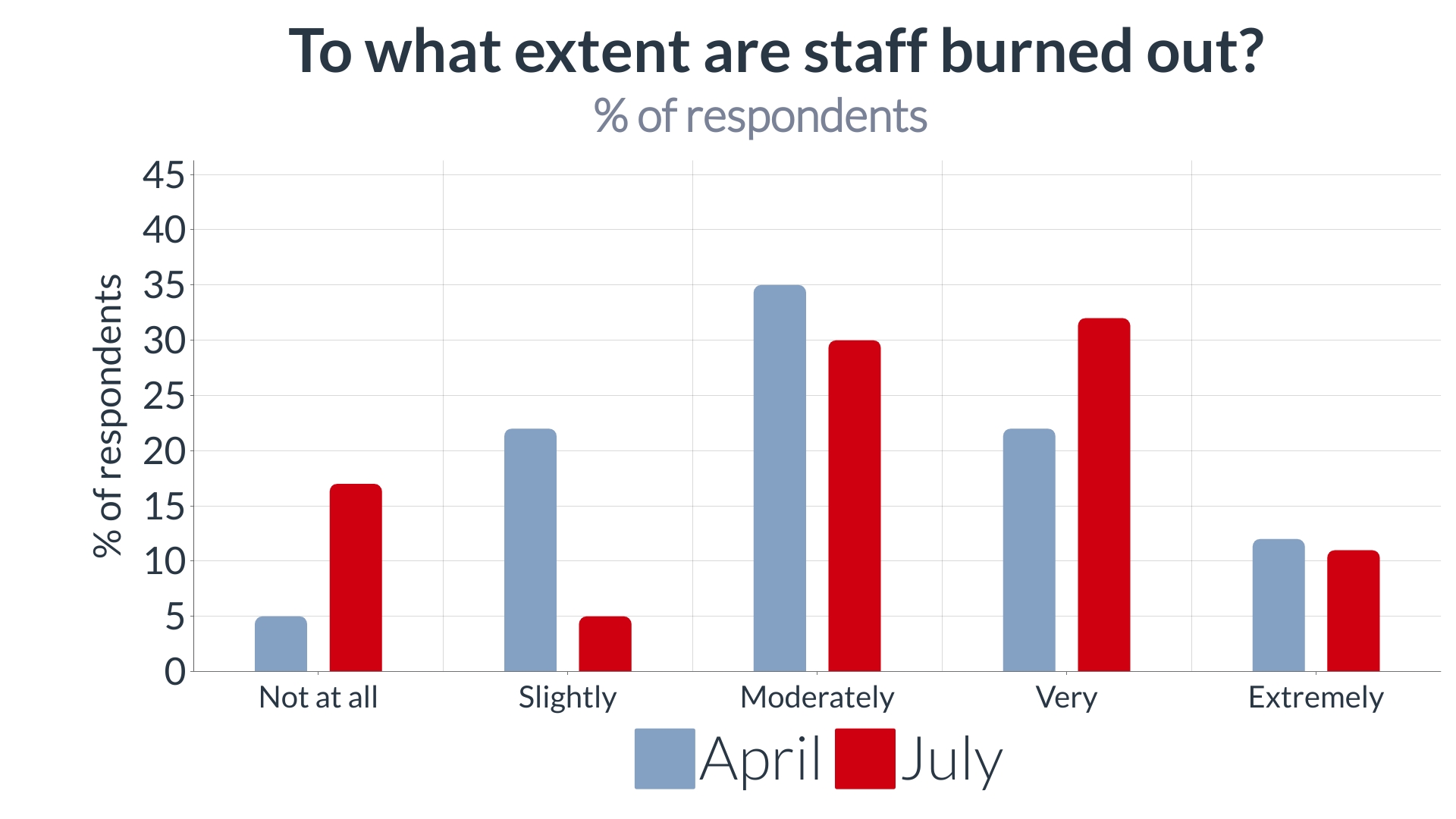
Burn-out remains on the high side
Several respondents expressed concern about staff burnout and stress, particularly in the context of staffing shortages and the pressures of corporate practice. One comment highlighted ongoing interpersonal challenges and high turnover among support staff, indicating deeper issues affecting team stability and morale. Another called for a public-facing marketing campaign to help manage client expectations and reduce the stress placed on veterinary teams. Additionally, a remark about corporate practices emphasized how a focus on profit can contribute to a workplace culture that heightens burnout. These comments reinforce the quantitative findings that burnout remains a significant and possibly growing concern within veterinary practices.

Staff shortages are having a strong impact
Survey respondents highlighted significant concerns around staffing shortages. One comment pointed to the difficulty of hiring and retaining staff on Long Island, noting internal team conflict and high turnover. Another expressed concern that client expectations remain high despite limited staff capacity, suggesting the need for public education. A relief veterinarian described widespread burnout among full-time colleagues, contributing to staffing instability. Others criticized corporate practice environments for overworking associates and contributing to high attrition. These comments echo broader industry trends: difficulty recruiting and retaining qualified staff is exacerbating stress within veterinary teams and impacting patient care.

H5N1 is spreading slower than a few months ago
NYS Department of Health advises that the current public health risk from H5N1 remains low and that no human cases have been reported to date. USDA publishes an outbreak map for cattle that shows no outbreaks in NY State. There have been 4 confirmed cases in the last 30 days, compared to 1078 for the whole outbreak. A similar map for chicken flocks shows just 1 detection in July, which was in Pennsylvania. There were thousands of flocks affected during the outbreak, indicating that the spread of the disease is currently slow.
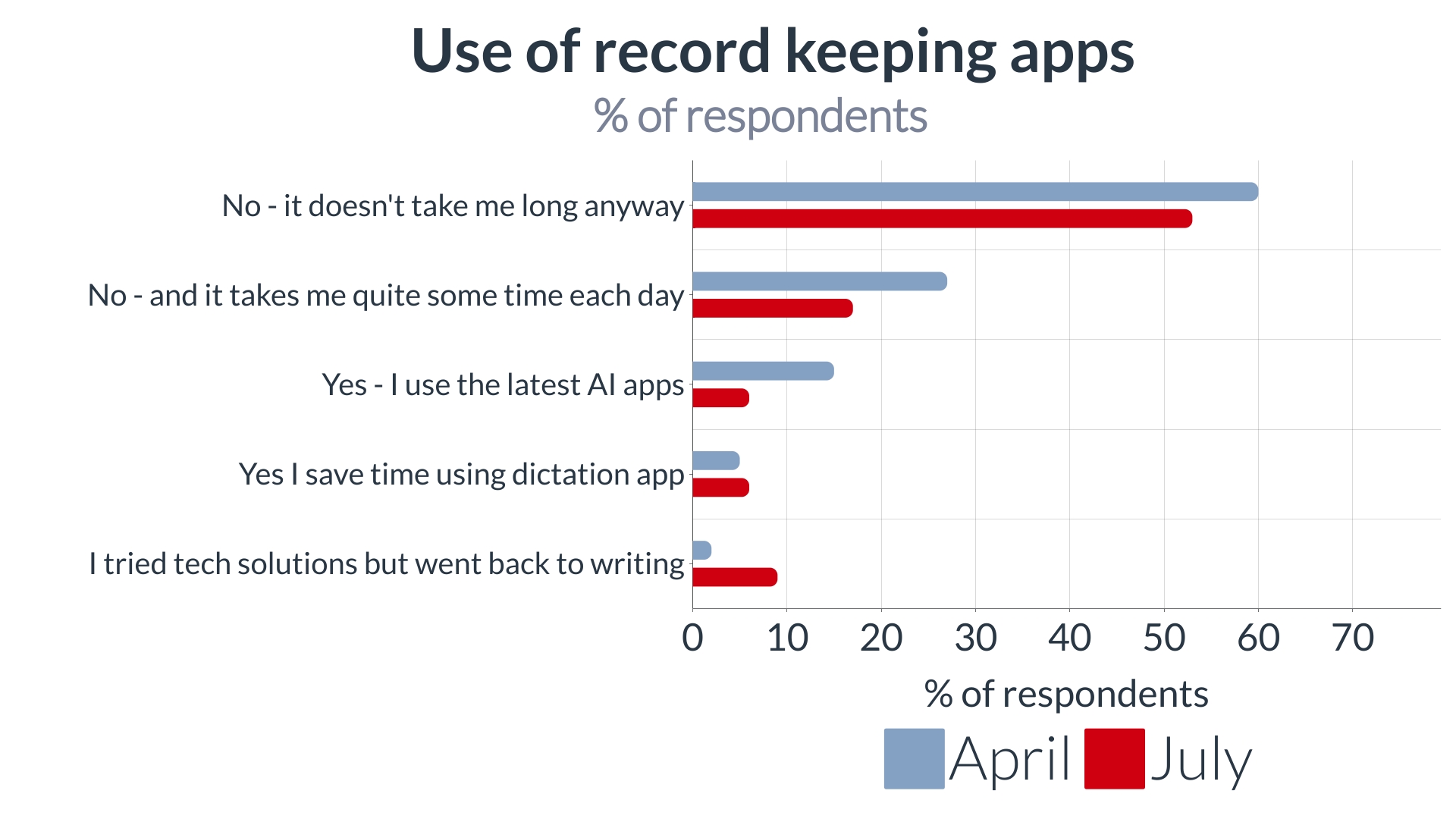
Record keeping apps not yet delivering on their promise
First there were dictation apps for medical record keeping. Now there are even more powerful AI versions. They have the potential to make a dramatic reduction in the time you take to keep medical records. Watch our webinar panel to see how your colleagues have saved time.
However the survey indicates that many don’t see the value as they don’t find record keeping takes much time. Between April and June we saw that a large proportion of the few who had been using AI apps for record-keeping went back to the old way of writing. Less than 20% are using some type of technology to help reduce the time it takes to keep records.

Increase in charging for credit card use
More members are aware that it is now legal to charge for credit card use, and there has been a slight uptick in the number who are taking advantage. This simple change can increase profitability by 10% or more.
Charging for credit card use has become very common across many medical and related services. Experience from verticals like dentistry indicate that clients are very willing to either pay the fee or pay be debit card, both of which bring cost-savings of 2 to 3% per transaction.