
Jessica McArt Named Dean of the College of Veterinary Medicine
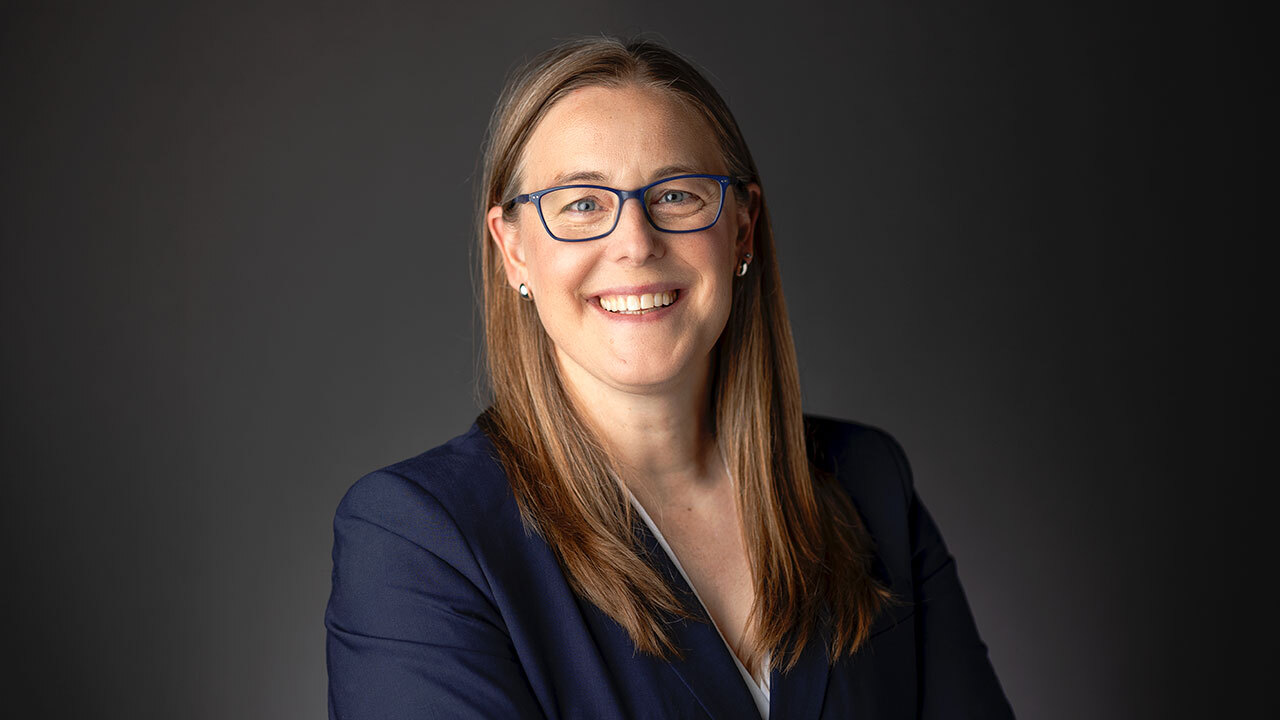
Dr. Jessica McArt, DVM '07, Ph.D. '13, has been named the Austin O. Hooey Dean of the Cornell University College of Veterinary Medicine (CVM), effective July 15. Her appointment was approved May 20 by the Cornell Board of Trustees' Executive Committee and ratified June 2 by the State University of New York's Board of Trustees.
McArt, professor of ambulatory and production medicine and chair of the Department of Population Medicine and Diagnostic Sciences, succeeds Dr. Lorin Warnick, Ph.D. '94, who has served as dean since 2016 and plans to return to research and teaching at Cornell.
“I am deeply grateful to Lorin for his outstanding leadership, and I look forward to working with Jessica to continue to grow CVM's research, teaching and outreach mission,” Bala added. “She has the commitment and expertise to enhance the college's reputation as one of the premier veterinary programs in the world.”
As dean, McArt plans to advance initiatives that combine CVM's disciplines with other entities at Cornell to drive discovery, strengthen programs that meet community and public-health needs, and support students' educational interests. “I am very passionate about the College of Veterinary Medicine, and I'm excited to work with faculty, staff and students to advance the opportunities this college has to offer,” she said. “Dean Warnick accomplished a great deal during his tenure, and I'm very excited to build upon the solid foundation he has left us.”
Collaboration across silos
McArt joined Cornell in 2014 as assistant professor of ambulatory and production medicine, served as section chief in the Ambulatory and Production Medicine Clinic from 2017–22, and was a visiting scientist with Agriculture Victoria in Bundoora, Australia, from 2023–24. A self-described “community-minded leader,” she plans to build on efforts from Warnick's tenure and major philanthropic investments — among them the Center for Veterinary Business and Entrepreneurship, Cornell Equine, the Richard P. Riney Canine Health Center, the K. Lisa Yang Center for Wildlife Health, and the Duffield Institute for Animal Behavior.
Academia has long nurtured individual researchers and programs that push discovery forward, McArt said, and that model has worked well. “At the same time, we have many experts approaching questions from different angles, and when they collaborate, they can bring that unique expertise together to tackle challenges that no single investigator could individually address.” To that end, she would like to create opportunities — informal gatherings and seed funding — to bridge academic silos and support interdisciplinary work. She pointed to Maddie's Shelter & Community Medicine, which recently surveyed Tompkins County to assess public access to veterinary care, as a model of community-focused research.
Education, debt, and AI
In education, McArt envisions helping students combine their interests as they pursue their degrees — pairing veterinary training with business and leadership education, for instance, to prepare graduates to start or buy into a practice. “We can enable students to create their own niche within veterinary medicine and advance leadership in multiple directions,” she said.
Student debt is among the biggest challenges she anticipates. “It's a significant concern across the country,” McArt said. “We are looking for ways to reduce that burden so graduates can pursue the careers they are most passionate about, rather than choosing positions primarily to pay down debt.”
She also sees opportunity in artificial intelligence, which the hospital is already adopting. With owner permission, clinical teams use AI to record appointments and draft preliminary notes, and Cornell radiologists are exploring AI to help interpret radiographs. “From a student-learning perspective, it's imperative that we teach them how to use AI effectively while ensuring they develop strong clinical reasoning, sound judgment and problem-solving skills — all things AI cannot replace,” she said.
McArt is trained as a dairy veterinarian and epidemiologist, focusing on the identification, epidemiology and economics of diseases in dairy cows around calving. Before Cornell she was assistant professor of livestock medicine and population health at Colorado State University. She holds a bachelor's degree from Dartmouth College and a DVM and doctorate in comparative biomedical sciences from Cornell, and is a diplomate of the American Board of Veterinary Practitioners (Dairy Practice).
Reprinted courtesy of the Cornell University College of Veterinary Medicine.